
🏢 Profile
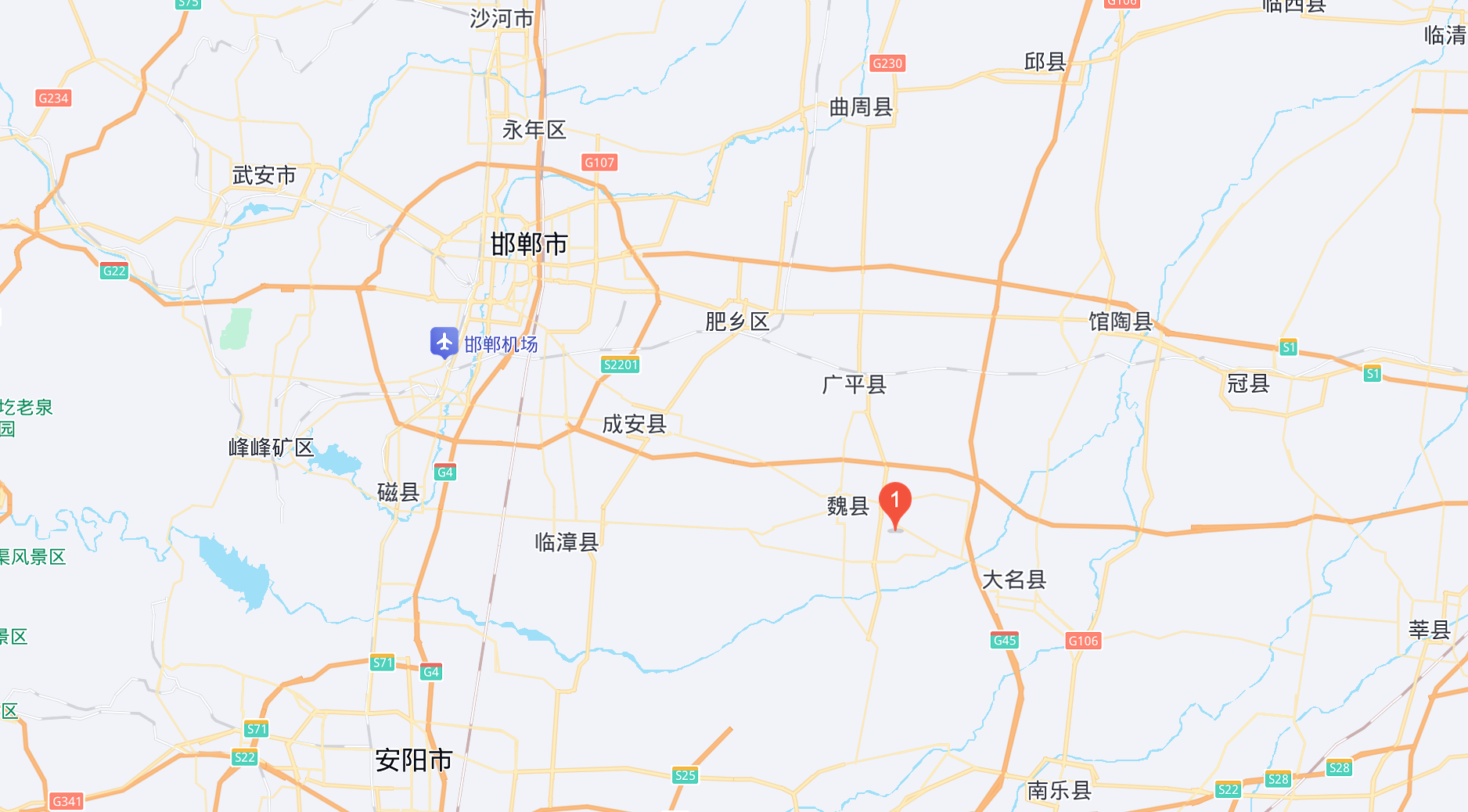
LandVIO established in 2019 and headquartered in Handan City, Hebei Province, China, it's a high-tech enterprise focused on the R&D and manufacturing of ceramic filters as. Leveraging proprietary ceramic catalyst filter forming technology and nano-catalyst impregnation techniques, the company produces ceramic filters characterized by high porosity, high-temperature resistance, high strength, and low resistance.
As a pioneer in domestic ceramic catalytic technology, the company has directly served over 30 large-scale enterprises in the glass, cement, and chemical industries. Furthermore, through collaborations with environmental service providers, its products have been deployed in more than 100 various industrial furnaces
Our products have been selected for inclusion in the National Catalog of Advanced Pollution Prevention Technologiesand the National Catalog of Major Encouraged Environmental Protection Technologies and Equipmen
🔧 DeDust Ceramic Filter
Raw Material Selection and Molding Process
High-alumina ceramic fiber cotton is selected, with strict control over impurity content (excluding Al₂O₃ and SiO₂) to below 0.3%, as well as parameters like fiber diameter and slag ball content. An axial lamination molding process is adopted, where the fiber slurry is uniformly layered step-by-step via centrifugal force using an external mold. This ensures even wall thickness distribution in the filter tube, avoiding agglomeration. The final product comprises over 100 layers of filter paper, guaranteeing high strength .
Structural Design and Surface Characteristics
The ceramic filter is formed with an external mold, retaining the mold's imprint on the outer surface. This design enhances the adsorption efficiency of desulfurizing agents and prevents particles from penetrating the filter surface, thereby reducing clogging risks.
Drying and Curing Technology
A self-developed dryer is employed, with automated control of the drying temperature curve to ensure uniform drying without damaging the ceramic tube’s structure. This preserves the tube’s high strength throughout the process.
Precision Machining and Reinforcement
Grinding techniques strictly control the uniformity of flange and wall thickness, linearity of the body, and flatness of the flanges, ensuring even stress distribution during operation. Secondary curing is applied to high-stress areas (e.g., flanges and critical tube sections), further enhancing overall strength .
🌿 DeNOx Catalytic Filter
Deep Impregnation with Nano-Catalyst Slurry
Ceramic fiber filters undergo deep impregnation using a nano-scale catalyst slurry. The impregnation process is strictly controlled to ensure uniform distribution of the catalyst. Unlike traditional methods that achieve only micrometer-level catalyst adhesion, Landun employs vanadium-titanium nanomaterials to form a homogeneous suspension. The active component exhibits a D50 particle size of approximately 100 nm, with a specific surface area of up to 80 m²/g.
Precision Control in Catalyst Manufacturing
The vanadium-titanium catalyst manufacturing process is meticulously managed to ensure vanadium pentoxide (V⁵⁺) remains the dominant valence state. This eliminates the need for an additional conversion step from V⁴⁺ to V⁵⁺ during catalysis. A self-developed dryer with automated temperature curve control ensures uniform drying, resulting in an attractive golden-yellow hue of the ceramic catalytic filter.
Enhanced Performance and Regeneration
Rigorous material selection and a unique nano-pore structure prevent catalyst poisoning issues common in SCR systems. Occasional declines in denitrification efficiency can be resolved through online high-temperature catalyst regeneration.
Efficiency and Multi-Pollutant Control
Denitrification efficiency exceeds 95%, with typical emission concentrations ranging from 50–200 mg/m³. Integrated with ceramic monolithic technology, the system simultaneously achieves desulfurization, denitrification, dust removal, dioxin elimination, and removal of acidic components such as HF/HCl.
🔬 Core Technology
1. Integrated Forming Technology for Ceramic Fiber Filter
This technology has overcome challenges in ceramic fiber molding (awarded a national patent), resulting in a doubling of the filter's strength.
It employs an axial superposition material forming process. Utilizing an outer mold forming method, the ceramic fiber slurry is uniformly layered through centrifugal force. This ensures an even distribution of the wall thickness, preventing agglomeration. The final product consists of over 100 layers of superimposed filter paper, guaranteeing high strength.
The outer surface formed by the mold retains the mold's impression. This characteristic enhances the adsorption effect of the desulfurizing agent and prevents dust from penetrating the filter's surface, thereby effectively reducing filter clogging.
2. Deep Impregnation Technology with Nano-catalysts
This represents a breakthrough in proprietary slurry preparation technology (awarded a national patent), achieving self-developed capability and breaking foreign technological monopolies.
The process involves using a nano-grade catalyst slurry for deep impregnation of the filter. The impregnation process is strictly controlled to ensure the catalyst is distributed evenly. The nano-catalyst slurry forms a uniform suspension, with active component particles having a D50 of approximately 100 nm and a specific surface area as high as 80 m²/g.
The dynamic deep impregnation lasts over 6 hours, resulting in an average catalyst loading of <0.1 µm. This ensures the catalyst is uniformly distributed, with thorough impregnation across more than 100 filter paper layers
📞 Contact us
📞 Tel. :+086-17318258521
📧 Email:marketing@landvio.com.cn
🌐 Website:https://en.landvio.com.cn